Lupieliving

living with lupus, day by day, moment by moment

“All magic comes with a price.” -Rumpelstiltskin

Without medicine, I would most likely be dead. To a lupie like me, lifesaving drugs are like magic. But like magic, taking these drugs comes with a heavy price of suffering its many side effects.

There are so many things wrong with me on any given day that a meeting with my doctor sometimes seems like a big negotiation session. With every sympton I describe- and there are many -there is a medicine for it. Of course, I would gladly take 50 pills a day not to feel all my pain but each pill comes with its own list of side effects. Choosing a medicine regiment is like entering a relationship with a potentially good person but with a lot of issues.

Over time, a number of medicine have been prescribed to me, many of which I have not taken, such as – omeprazole, valtrex, meloxicam, ondansetron, nexium, percoset, zyprexa, tramadol – all dealing with a particular symptom (e.g., joint pain) or with a side effect (e.g., nausea).  I am trying to take only what I consider to be “life saving” pills.  Basically, drugs that tend to cure, not mask my symptoms. These include an immunosuppressant, a steroid, an anti-malarial and a heart medicine. It’s the barebone my doctor is allowing me to take.  But even with these limited number of medications, I suffer multitude of side effects such as nausea, fever, vomiting, heartburn, dizziness, etc.  Not to mention that by taking these heavy hitters, I am at high risk for other longterm side effects, such as cancer.

Over the years, I have also added non-life-saving drugs such as cymbalta and gabapentin to help me with my neuropathy and fibromyalgia muscle pain.  I resisted as long as I could but had to try something for all the pain.  Unfortunately, it really isn’t doing much.

Being dependent on pills is very frightening. I got my first real scare when Storm Sandy hit and there was a danger that I would not be able to get my needed refills in time.  More than water or food, my first thoughts regarding survival was my pills. I knew I would not last very long without them.

I dream of a day when I will be drug free, or at least, mostly drug free.  But considering the drop in mortality rate among lupies taking these meds, I am glad I have the option to take them, even with its often heavy price.
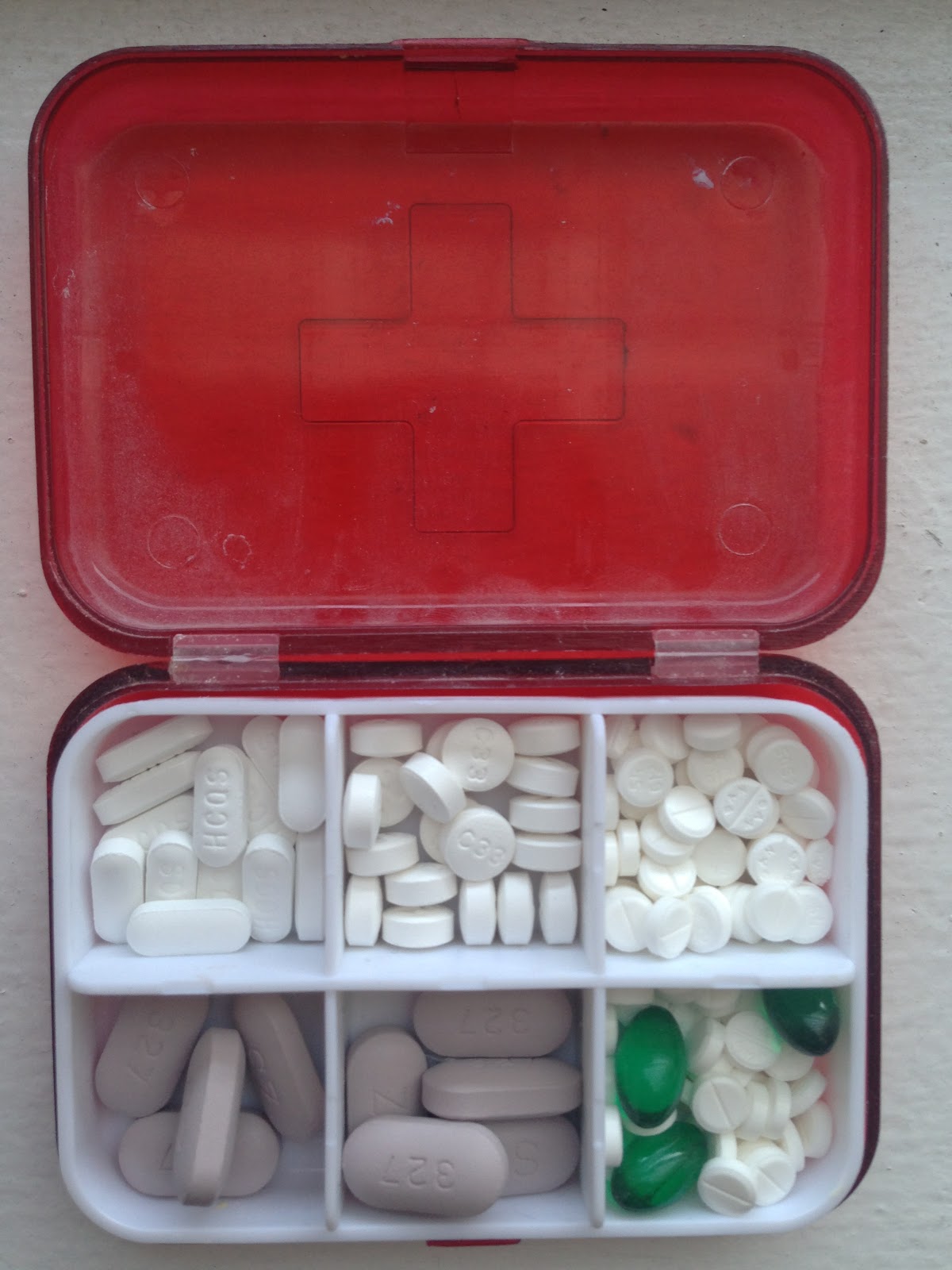
My Box of Essentials
                                                                      My Box of Essentials

“How do you want to deliver your baby?”

Missing from this inquiry was “How do you (lupus patient) want to deliver your baby (since it is a high risk pregnancy)“?

During my pregnancy, I got close to friends who are pregnant and became friends with pregnant women.  What I didn’t do was talk with women with lupus or other chronic illnesses that went through pregnancy.  In hindsight, this was a fatal mistake.  Experiencing lupus and pregnancy for the first time, I had no idea what to expect.  So I walked the path with women whose pregnancies were not complicated by an illness.  But mine was a high-risk pregnancy and I was not normal.  I should have prepared differently.

By my sixth month, I had announced my pregnancy to everyone I knew.  I was also visibly pregnant.  What was not visible, however, was my illness.  No one could tell I was sick, and I did not know better being that I was recently diagnosed.  So I concerned myself with buying strollers, baby carriers, diaper bags, and breast pumps.  I fretted over what kind of food I should avoid.  I continued to work and planned on how I would be returning to work after my maternity leave.  I decided that while home birth is not possible, I was going to try doing a natural birth without an epidural.  I attended birthing classes focused on pain management.  I looked for a doula.  I was doing everything that other “normal” pregnant moms-to-be were doing.

All wrong.

This is what I SHOULD have been doing.  I should have lined up a clear communication channel between my gynecologist and my rheumatologist so cooperatively, they are able to monitor my symptoms.  I should have fretted over what types of medicine I could take and when I might need them.  Even though I could hope for a natural birth, I should have prepared for a c-section since most lupus pregnancy end in preterm birth.  I should have learned of complications such as preeclampsia, since 1 out of 3 lupus births end in preeclampsia.  I should have researched NICUs.  I should not have been so tied to the idea of breastfeeding.  I should have prepared myself for the fact that I might be unable to care for my baby and lined up help, lots of help.  I should have learned to pace myself.

While nothing can really prepare you for the birth of your baby, I certainly feel that if my focus had been better aligned, the outcome of my first year of motherhood would have been very different.  And, I would not have suffered such a life threatening lupus flare.  I don’t have many regrets in my life, but I do regret not be better prepared for this pregnancy.

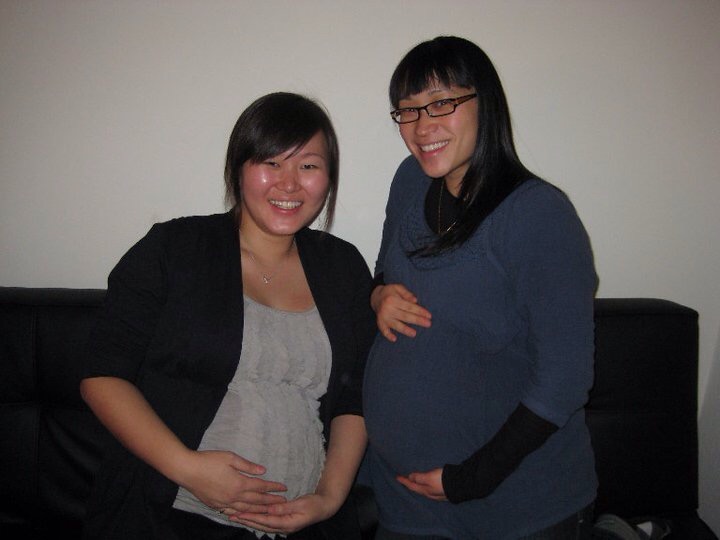
Six months pregnant, mistakenly following other women with  "normal" pregnancies

Six months pregnant and mistakenly following other women with “normal” pregnancies

“How are you?”

It’s a harmless question, really, and the first thing people usually ask after saying hello.  Aside from the question of when my son will have a little sister or brother (more on that next time), I find this to be the hardest question to answer.  After living with lupus for 4 years, I still have not found an appropriate response to this very simple question.

The difficulty stems from the fact that when someone asks how you are doing, they generally expect the answer to be “I’m fine, and you?”  They want to move on and talk about things, other things, not about how you are REALLY doing.  People become very uncomfortable with responses, such as “I’m really sick.”   I have learned this the hard way.  In the early stages of my illness, I used to take the time to answer the question with how I was really doing.  How sick I was.  How difficult my days are.  How my life is changing because of the illness.  But I found that in most instances, I was wasting my breath.  Most people did not know how to respond to such stories.  They were uncomfortable.  They could not relate.  They could not comfort.  Silence usually followed.

So now I am wary.  I examine the person asking the question and decide whether or not I should answer with a simple “I’m doing ok” or ——–

“Well, so. .  . I wake up in the morning like I ran a marathon, drank lots of tequila and got run over by a truck.  My body aches, my head hurts, I’m dizzy, nauseous and have difficulty breathing.  i feel like vomiting.  And I’m also dead tired.   This happens every morning, like ground hog day.  No exceptions.  After some time, I manage to drag myself out.  I try to eat something so I can take my morning medications, there are lots and usually, I feel even more nauseous after taking them.  Because of my neuropathy, my tastebuds are shot and I cannot taste anything I eat.  I also have many GI issues so eating is never really fun.  While most people are well, and occasionally became sick.  My baseline is that I’m sick ALL THE TIME.  24/7.  And then, I’m frequently ill.  So I am usually balancing pain, fatigue and a rotary of illnesses all day.  The pain is widespread, from head to toe.  My body feels like it’s burning, like someone is punching me and as if there are a thousand needles poking me.  It aches.  The fatigue hits hard throughout the day and it feels like I have pulled a few straight all-nighters.  I feel like the walking dead.  Walking, ah, now that is a tough one.  My legs and feet are numb from the neuropathy and I feel pain with every step.  It’s like having a permanent shin splint and bunch of broken glass stuck to your feet.  Then there are rotary of illnesses.  I get dizzy and nauseous if I move just the wrong way.  Headaches come from nowhere.  I have difficulty breathing, as if gasping air from a straw.  I’m also sensitive to everything such as light, sound and temperature.  Because of the Raynaud’s, my hands and feet are always freezing. My eyes are always dry and my hair falls out a lot.  I deal with the side effects of my medicine, such as weight gain, bloatedness, upset stomach and a low immune system.  Many times, I have cuts and bruises that I do not know the cause of.  At night, even though I am exhausted, I cannot fall asleep because of all the pain.  When I do fall asleep, I suffer from unrestful sleep and night sweats.  This is just the physical stuff, let’s not even get into how this is all weighing on me mentally . . . .”

So if you are asking, really asking how I am, this is really how I am doing these days.

“Up, mom, up” , , , my two year old son moaned during his sleep.  At the time, he did not understand why his mom was always laying down and not playing with him.  I did not know that my illness touched him so deeply that he would dream about it.

It broke my heart.

I became pregnant the same year that I was newly diagnosed with lupus.  So I do not know what motherhood would be like without lupus and my son does not know a mom without lupus.  During his first six months, i was getting progressively sicker.  I still tried to do everything, however, and maybe because I pushed so hard,  I ended up being out of commission for the second six months of his first year.  I still remember taking my son to a mommy-and-me sing-and-sign class and not being able to get up from the floor to join in on the dancing.  My health spiraled out of control rather quickly from then on and soon I was bedridden and fighting for my life.  I missed a lot of his first moments, the first teeth, the first crawl, etc.

When i came out of my haze, i faced a long road to recovery.  My son did not quite know what to make of me and my presence.  From 6 to 12 months, his main caretakers were his dad and his grandmother.  He must have thought, “who was this new woman sitting and laying near me all day?”  My interaction with him were very limited his first couple of years.  It usually involved a lot of sitting and observing.  With always another caregiver around, I would accompany him to the museum, or to the park, and sit on the bench while he played with his dad or grandmother.   At home, I would be in bed or on the couch, watching him play.  I was always around, but never really there. It was incredibly frustrating to not be able to care and play with your own child.  There were lots of tears of heartbreak.

My son’s growth and my rehabilitation happened in tandem.  Now three, my son is less in need of care (that i cannot provide) and more in need of company.  While I still cannot do a lot of things, I have figured out what i can do as a “sedentary mom”  For example, I leave active sports to his dad, while I engage him in crafts and baking.  There are still many times of the day where i cannot be fully engaged.  I always feel bad but I like to think I am raising a more empathetic son.  The other day, when I needed to lie down and rest, instead of tugging at my arms to “get up” he grabbed the iPad and sat next to me.  He kept me company while I relaxed and this time, the moment warmed, rather than broke my heart.

IMG_0681

Letting the teacher take on the double rainbow pose with my son. While I enjoy going to yoga with my son, I am not able to partake in many of the challenging poses. He still loves it!

Overlap Diseases

Brrrr . . .  it’s getting cold outside.  Weather seems to have a lot of effect on my symptoms.  One thing that I fear when the temperature drops are my cold hands and feet because I suffer from an overlap disease called “raynaud’s”.  Most lupus patients suffer from overlapping diseases such as fibromyalgia, Sjogren, and many others.  Often times, it is hard to separate out which disease you are suffering from — a source of frustration, indeed.

Raynaud’s disease causes some areas of your body to feel numb and cold in response to cold temperature and stress.  Small arteries that supply blood to your skin narrow, limiting blood circulation to affected areas, such as your fingers, toes, nose, lips and ears.  There is a prickly feeling, much stinging pain and numbness.  To me, it feels a lot like when you play in the snow (making snowman, sledding, skiing) and you come inside to warm up and your hands take awhile to warm up.  During the warm up process, you feel that weird stinging, throbbing pain and numbness.  Except, I feel that way all the time.  My hands and feet are always cold as a block of ice.

Even though it could be a debilitating and serious disease, requiring medication and/or surgery.  For me, the symptoms have not been too severe.  It causes much discomfort, however, and in the winter, I resort to war mode — hand warmers, lots of heat, hot water, heaters, socks, gloves, hats and I gravitate towards heat like a cat.

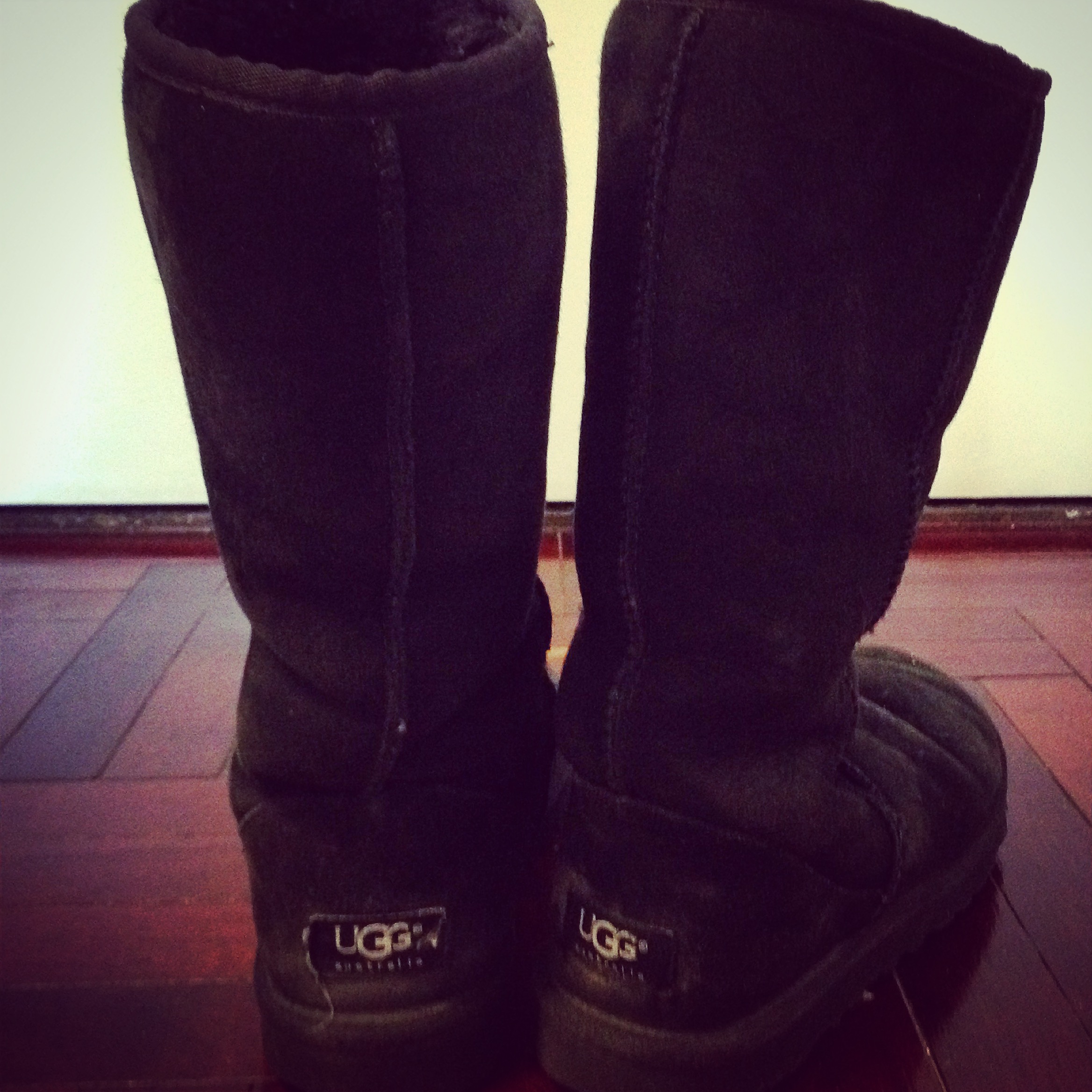
One thing I cannot live without are my Uggs.  It does a great job keeping my feet warm.  Thank goodness for furry shoes.IMG_0664

Le Scaphandre et Le papillon (The Diving Bell and the Butterfly)*

About seven years ago, I went to see the “Diving Bell and the Butterfly” with my husband, who was my boyfriend at the time.  It was a true biographical film depicting the life of a French-ELLE magazine editor, who suffered a massive stroke at the age of 43. The stroke left him in a “locked-in syndrome” which meant he was physically paralyzed but mentally normal. He wrote his entire memoir by blinking his left eyelid when shown the letter he wanted to communicate.

At the time I saw the movie, I thought how sad the story seemed.  Here was a man who took his life by the storm.  He had such a full life.  When he became paralyzed, his whole life, along with his body, betrayed him.  His lover, his job, his friends, etc.  As sad as it was, the story seemed so far from my reality that I tucked it away in my mind as just another great storytelling of an unfortunate life.

My reality, of course, has since changed.

While I relate to the the author on many levels now, the movie really stands out in my mind because of his description of what the locked-in syndrome felt like.  Trapped in a paralyzed body but with a clear mind, he felt like he was descending darker into the ocean, while trapped in a diving bell.  This is how I feel when I experience lupus fatigue.

Fatigue, that is debilitating fatigue, is one of the most common symptoms of lupus.  The statement that “I am so tired” does not even come close to the kind of fatigue I experience.  It is really difficult to get this through to someone who has never experienced it.  Often the response I hear is “I’m so tired too!”  If only one knew.

When I was first diagnosed with lupus and read that fatigue is one of the common symptons of lupus, I did not take it seriously. I thought I knew fatigue.  After all, in my profession as a lawyer and throughout my academic career, it was not uncommon for me to pull all nighters or near all nighters for weeks at a time.  I have known exhaustion.  Or so I thought.

I did not even recognize that the sympton I was experiencing was fatigue.  For my body to be so paralyzed that I could not even open my mouth to ask for water or to lift my head to drink the water that was left at by bedside, I could not understand what I was feeling. I did not understand it was fatigue.  I could not comprehend why in my mind, I was going over motions that I could not pysically enact.  Being so thirsty, I drank the water next to my bed a dozen times in my head, only to lay motionless with my throat perched and with tears rolling down my eyes.  I felt so trapped in a useless body. I felt paralyzed. I felt, as the author did, trapped in a diving bell.

I wish I had never learned what the author meant by his anaolgy.

The Diving Bell

____________________________________________________________________________________
*”Le Scaphandre et Le Paillpillon” by Jean Dominique Bauby

The assumption is that since I do not work, and I have a toddler at home, I must be a “SAHM” – a stay at home mom.

Yes, I am a mom and I do stay at home.  But this belies the real truth of why I am home . . .  I’m sick!

I am sick all the time.  Not just some days or parts of the day, but 24/7.  Whereas, most people are healthy and are sick occasionally, my baseline is that I am sick all the time and become ill very frequently.  I walk a tightrope all day and it is a full time job to keep my health in check.  So sleeping in, resting during the day, getting massages, and doing restorative yoga, all sound absolutely wonderful but I am not doing these for enjoyment, I am doing it so I don’t become ill and bedridden.  In between all these activities, I have to keep up with my doctor visits and take all my medications.  The thing that takes up most of my time, however, is being really sick.  Staying up all night because I am in so much pain, or because I am vomiting.  Not being able to eat because I am too nauseous.  Not being able to get up because I am too tired.  Having to lie down because I feel dizzy.  Being absolutely miserable because I have a splitting headache.  Not being able to walk because i have difficulty breathing.  The list goes on, and with lupus, you never know what will be thrown your way.  It’s like playing Russian roulette with my body everyday.

As much as I would like to be, I am not a SAHM since I am not capable of taking care of my son on my own.  I need full time help.  To many outsider, this might seem pretty nice . . . to only have one son, not work and have full time help.  It does not help that I do not look sick.  So I just let the assumption continue and many people do not know what goes on behind closed doors.  Many people would just not understand but I wish they did . . . .

IMG_0405

It wasn’t until I couldn’t hide it anymore that I started to share news of my pregnancy with family and friends.  I was about 20-22 weeks in, already into my third trimester.  If I could have given birth without telling anyone, that is the way I would have preferred it.

It was not that I was ashamed of the pregnancy.  My husband and I were newlyweds and this was welcomed news.

I am also not an introverted or a shy person, in fact, at the time, I was a social person who enjoyed celebrating life events with loved ones.

I was not particularly worried about the news affecting my career.

So then why wait so long?

It was the anxiety and fear that accompanied my high-risk lupus pregnancy.

I was diagnosed in May of 2010.  At the time, I had been married just under a year.  We have given some thought to starting a family but we were going to table it for a few more years.  But with the diagnosis of lupus came the urgency to start a family.  The general consensus amongst my doctors was that IF I was thinking of having children, I should start right away.  As a woman with lupus, you cannot get pregnant if your lupus is active so there is a small window.  And even after pregnancy, there’s a high chance of not being able to carry the child to term and/or losing the baby.  All that being said, with me being 33 at the time, the doctors reasoned that this could easily lead me to 40 and at that point, it would be near impossible for me to have a baby.  On this logic, I was referred to a high-risk gynecologist and even a fertility doctor.

So that’s how lupus pushed me into jump starting my pregnancy.

Fortunately for us, we became pregnant right away.  No problem there but then the fear started.

Of course, all new moms-to-be are overwhelmed with anxiety — but in addition to worrying about the type of baby carrier I was going to get, there were the more serious, and less pleasant worries of how the lupus was going to effect my health and that of my baby.

About 1/5 lupus pregnancies end in a miscarriage and 1/3 result in preterm deliveries.

To me, those were scary statistics that kept me in an heightened state of agitation.  Hence, instead of announcing the news at about 12 weeks, when it is traditionally done since that is when the risk of miscarriage reduces dramatically, I waited until a few weeks after my amniocentesis.  Emotionally, the whole pregnancy took a real toll on me as i was constantly at guards about the life growing inside me.  I even tried to distance myself from the fetus just in case something goes wrong and I lose the baby.  This made it really hard for me to envision a “happy post-birth life with an adorable baby”, which is what many pregnant moms seem to daydream about.

Physically, I was fighting another battle, as I was rather sick during the entire time of my pregnancy.  I suffered from extreme fatigue, muscle and joint pain, nausea, dizziness, headaches, loss of appetite and heartburn.  In hindsight, while many of my symptoms mimicked those of a pregnant woman, the severity in which I suffered from them was definitely the influence of lupus.  Getting pregnant so soon after my diagnosis, I could not tell the difference between lupus and pregnancy symptoms.  I just did not know my body well enough at the time.

Lupus affected every aspect of how I experienced my pregnancy, from inception to birth.  While I am grateful that I have a healthy and wonderful son, I cannot help but look back and wish I had a pregnancy, unaffected by my lupus.  I am left wondering how different my pregnancy experience would have been, and cannot help feeling a bit robbed.

Announcing my pregnancy to friends and family -- 22 weeks

Announcing my pregnancy to friends and family — 22 weeks

“It’s not like you are going to die. . . .”

I remember thinking I needed to exercise.  I was on a ski trip in Utah and I could not keep up. I was short of breath, my chest was hurting and my body was aching after one run on the slopes.  I called it quits, had some chow and went to bed thinking I must just be tired from working long hours, recovering from the holidays and flying. The next day, I woke up with incredible chest/back pains.  I told my husband to press a huge book on my back while I layed faced down to try relieve some of chest pain. I also tried getting a massage. None of these remedies helped, but again, I thought it was just a regular sort of body pain.  Nothing serious.

Then I woke up in the middle of the night crying.  Actually, I woke up wailing. I did not know what to do with myself because I was in so much pain.  As soon as the sun rose, my husband and I took a cab to the nearest hospital.  They ran a number of tests all morning.  At the end of it all, a doctor came in, and proudly announced that they figured it out — I had pneumonia.  What I found amazing is that they delivered this news like they won the lotto (for figuring out the cause) and as if I just had a common cold (no explanation whatsoever as to what pneumonia is).  This was the beginning of a long line of my interaction with doctors, where devastating news is nonchalantly delivered to me as if they were delivering news of the day’s weather.  To make the long story short, I stayed out the rest of my vacation in Utah, then flew home to NYC, went back to work, and in a short while, was hospitalized.  I had my lungs punctured and fluids drained. I was in debilitating bed rest for about two months.  My pneumonia was pneumonia pleurisy and possibly a flare.

When I returned to work, I started to have muscle and joint aches.  As if I didn’t learn my lesson the first time, I believed it was because I was out of shape again.  I thought the prolonged bed rest led me to these weird joint and muscle aches. I was also unreasonably fatigued all the time and had to steals little naps just to get through the day, but again, I reasoned that the pneumonia must have taken a toll on my body.  It wasn’t until I could no longer sit up on my own, or lift my arms to get dressed, that I finally went to see my doctor.  My primary physician, Dr. F, ran some blood tests and suspected that I might have lupus or sjogren. He referred me to a rheumatologist, Dr. G, who confirmed that I had “mild lupus”.

I was more confused than devastated. Lupus? What is that?

So I asked my rheumy Dr. G., who advised that I do not scare myself with websites and support groups and instead, referred me to an old pamphlet from the 1970s.  He stated that nothing really has changed since the pamphlet was published.  He then sent me home with a prescription for a low dose of prednisone.

I had lots of questions after reading the short pamphlet.

So I then turned to Dr. F with my inquiries, to which he impatiently replied — “It’s not like you are going to die from lupus!”

I took odd comfort from these unsympathetic comments.  After all, these are doctors and they must know what they are talking about, right?  Besides, I thought, my life is too busy to make room for lupus.  If it’s not going to kill me, what’s the big deal?

This was the wrong start to being a lupie.  Since the diagnosis, the mismanagement of my disease led me to come face to face with death and it was an ugly fight.  I have survived but not without a heavy price.*

*If anyone reading this has been newly diagnosed with Lupus, I urge you to become an educated lupie.  Please reach out to your local support group, the Lupus Foundation of America or even to me.  Avoid websites until you have read some books on lupus and living with lupus.

I am 37 years old and I have lupus. I have been living with this invisible, chronic, life-threatening, autoimmune disease for about 4 years. What has originally been diagnosed as “mild” lupus has since blown up into such a monster that it has successfully attacked every part of my body, inside and out, only sparing my kidney and my life. I have gone through more pain and suffering than I could have imagined for myself or for anyone I know. Until this point, the worst physical pain I experienced was being in bed with a flu. The lowest depth of misery was studying for the NY Bar exam. All of my experiences thus far paled in comparison to what lupus had in store for me. The scariest part of this disease is that, neither I nor my doctor could be certain that the worst is over, or that it might not happen again or that the next flare might not be worse. I shudder at the thought of possibly experiencing the worst parts of this disease again. Like a victim of a violent crime, I fear any repeat offenses by the disease. Unfortunately, the choice of not experiencing it all over again is not really up to me.

Than, what to do?

Because this is an incurable disease, I only have two choices; either learn to live with the disease or well, not live. At the highest points of my pain, the latter seemed very appealing. Even so, I do not think I am ready to throw in the towel just yet.

I learned that the five stages of grief are denial, anger, bargaining, depression and acceptance. I do mourn over the death of “me” and all that I was, and all that I could have been had I not been saddled with this new identity. I am hoping, however, that I have started on the road to acceptance. After all, I am now a Lupie and as much as I wish it was not the case, I have to learn to live as one.


the lupie life

the lupie life