Lupieliving

living with lupus, day by day, moment by moment

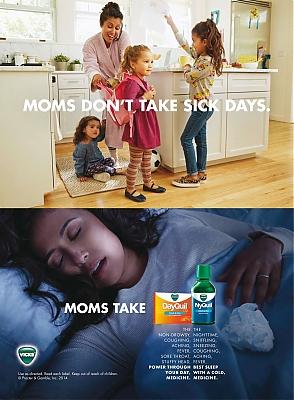
I was flipping through a magazine in the doctor’s waiting room when I came across this ad:


IMG_3568

I felt a flood of emotions. 

After all, I AM a mom who has to take a sick day, every single day. 

I felt ashamed.  “That’s right.  As a mom, I should not be taking sick days.  I should be doing more!” 

I felt angry.  “But I am sick! All the time.  I cannot become ‘unsick’ by simply taking a cold medicine and sleeping it off.” 

I felt indignant.  “I am sick everyday, but I still do a lot as a mom.” 

I felt torn.  “I should take sick days from parenting more because I really need to.” OR “I should take less sick days from parenting because my child needs me.”

I felt resentful.  “Why can’t I have a curable illness?”

I felt sad.  “I am not even a mom, being sick all the time.”

I felt defensive. “The only times I call in sick is when I’m so ill that I have been vomiting for eight hours straight.  Otherwise, even though I’m sick, I power through.”

I understand that chronically sick moms are not the core target audience for this ad.  I understand this ad never intended to promise a cure beyond that of the common cold/flu.  

Yet . . . YET . . . this idea that a mom needs to do everything in her power to get well because a mom cannot take a sick day from parenting really struck such a nerve with me. 

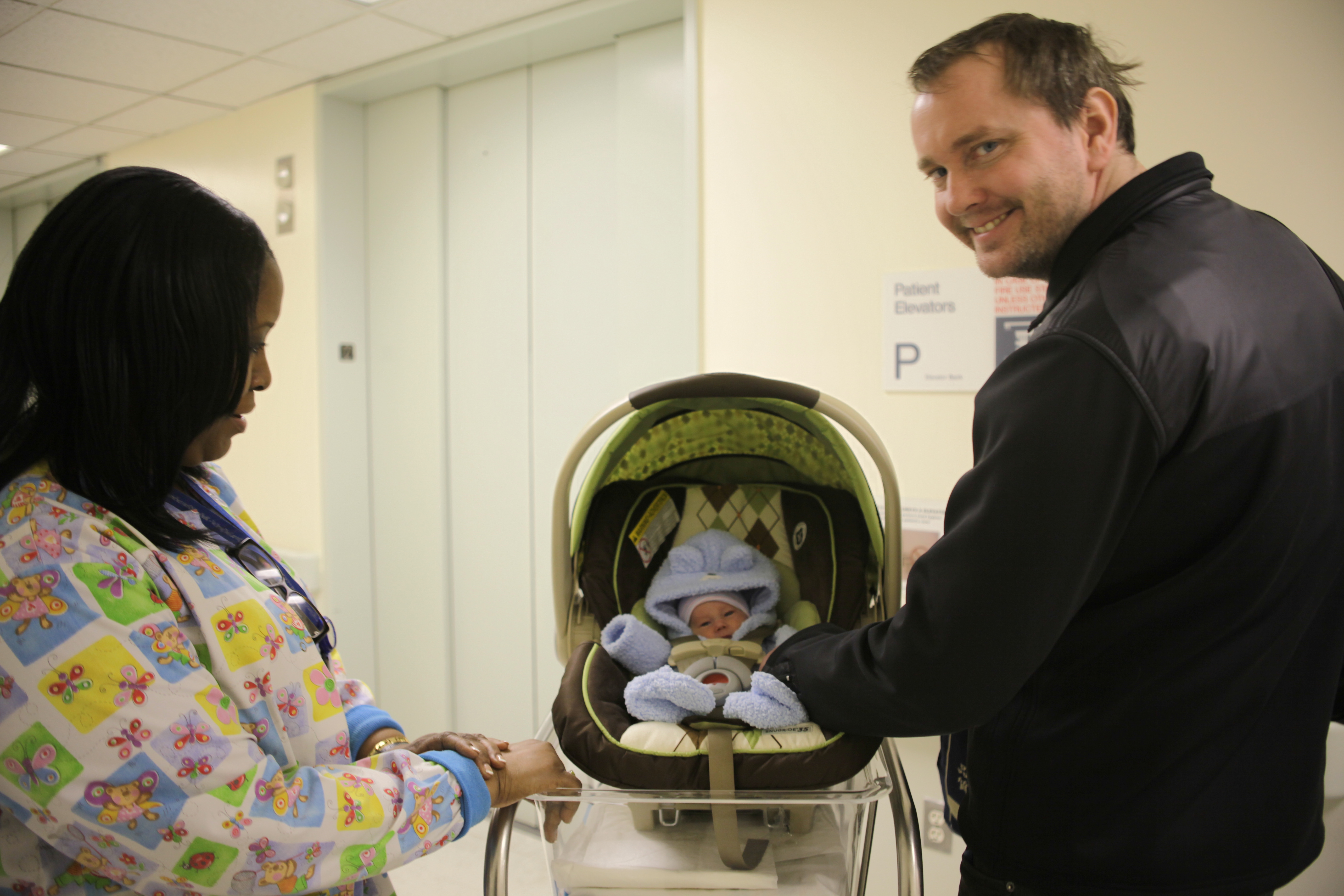
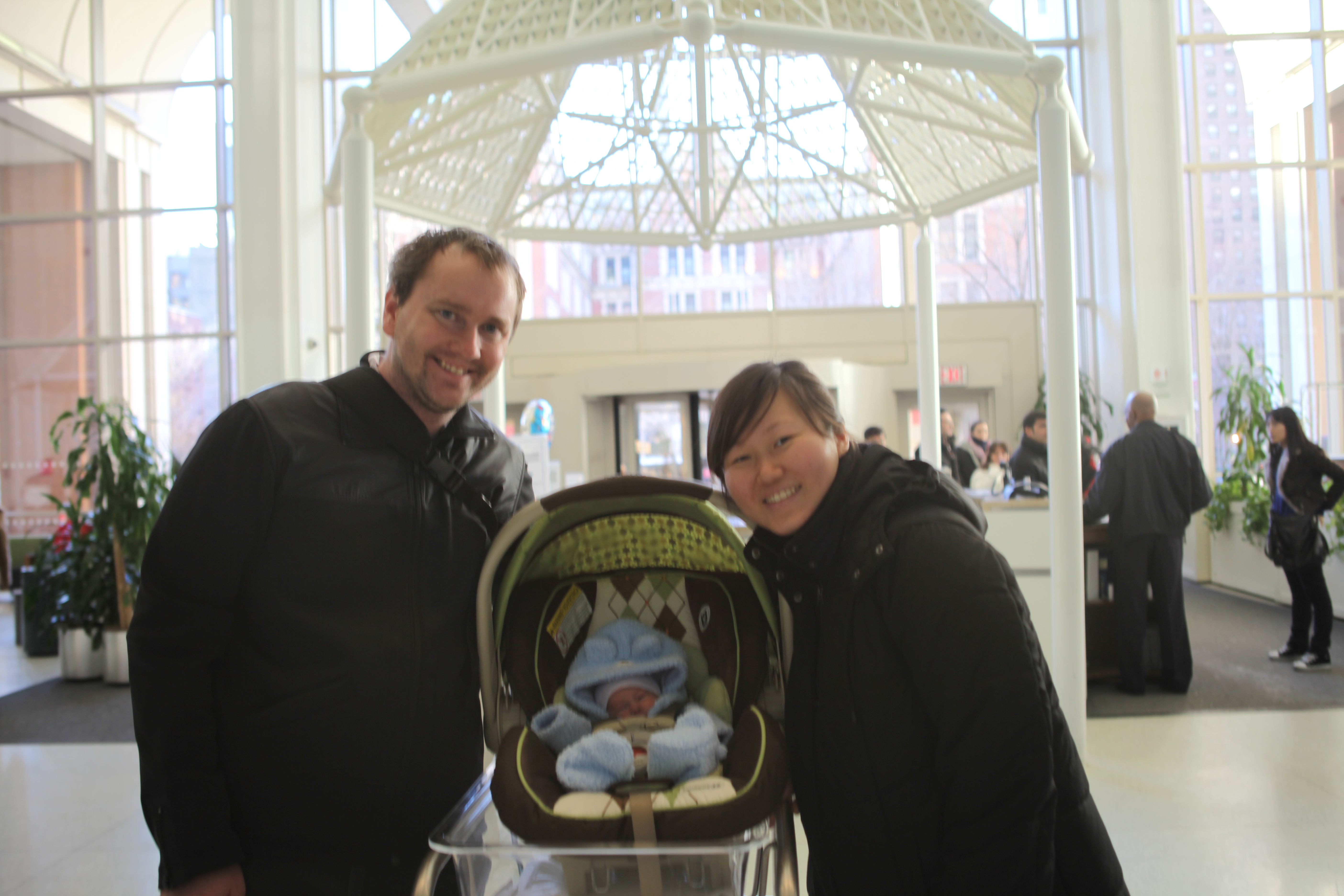
We got the call Valentine’s Day morning.  After 16 days in the NICU, the doctors advised that if all goes well, our baby would be able to go home the next day, so we should be prepares and also, to bring a car seat.  We could not believe it.  Even though we hoped and asked everyday since his birth, we subconsciously accepted the reality that preemies are usually kept until the full 40 weeks are up.  Sometimes, they are let out two to four weeks earlier than their due date, but it’s more of an exception than the rule.  To be let out more than four weeks earlier seemed like an unbelievable gift.  No more spending the entire day with our baby in the NICU.  No more sharing our time with other families with preemie babies.  No more doctors, nurses, social workers, wires, and monitors.  Best of all, no more leaving our little baby in the hospital overnight, alone in an isolatte, in the care of strangers.

I was bubbling with (cautioned) excitement.

We were nervous because there were still “tests” that they wanted to run and things they wanted to check off their list.  Mainly that Harry could maintain a normal body temperature in an open crib.  That he was able to bottle and breastfeed his milk, and not resort to the feeding tube.  That he is gaining weight and is of a proper weight.  That he is able to breath on his own.  That he shows no signs of apnea.  Luckily, he passed all of these tests.

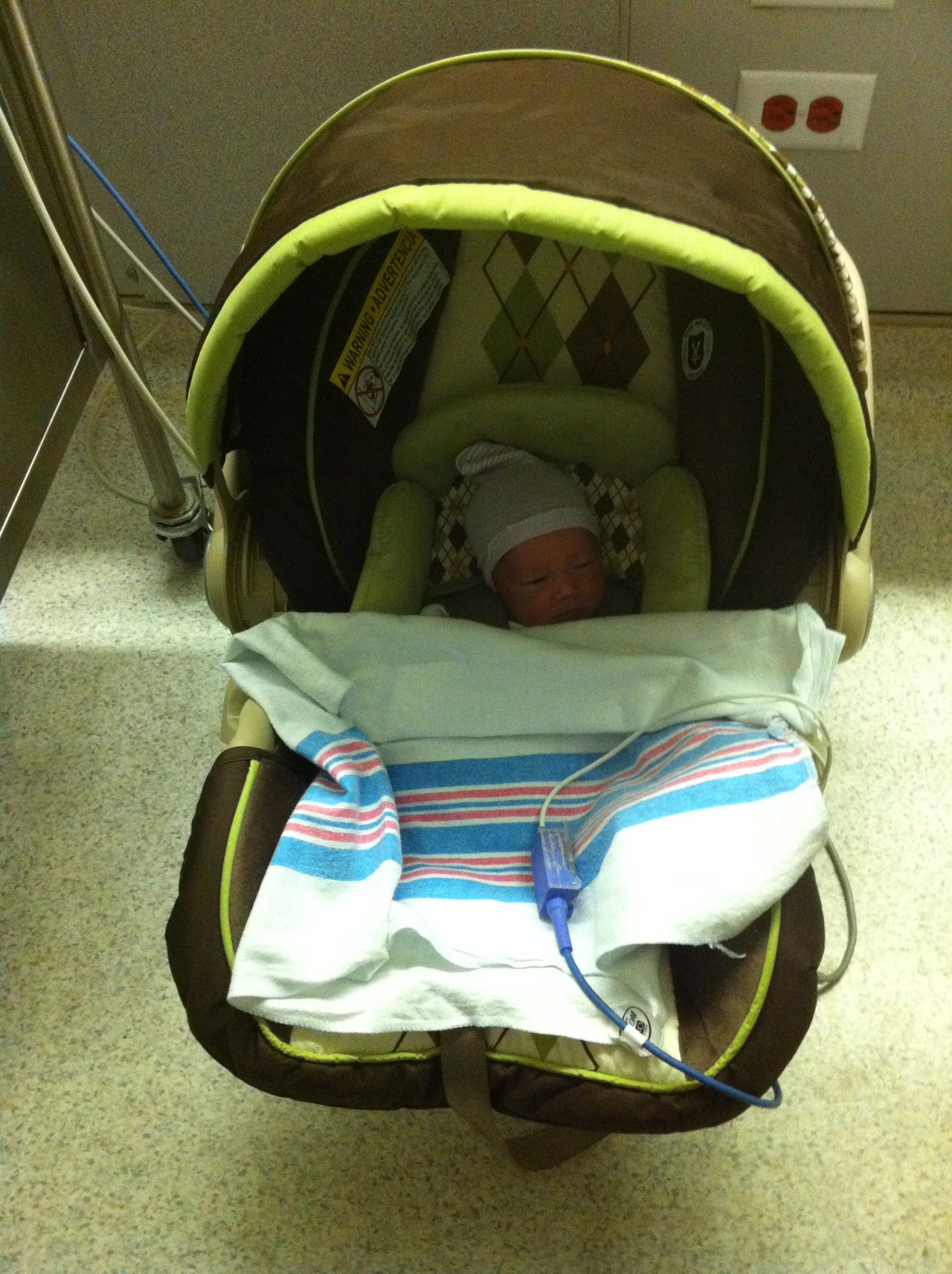
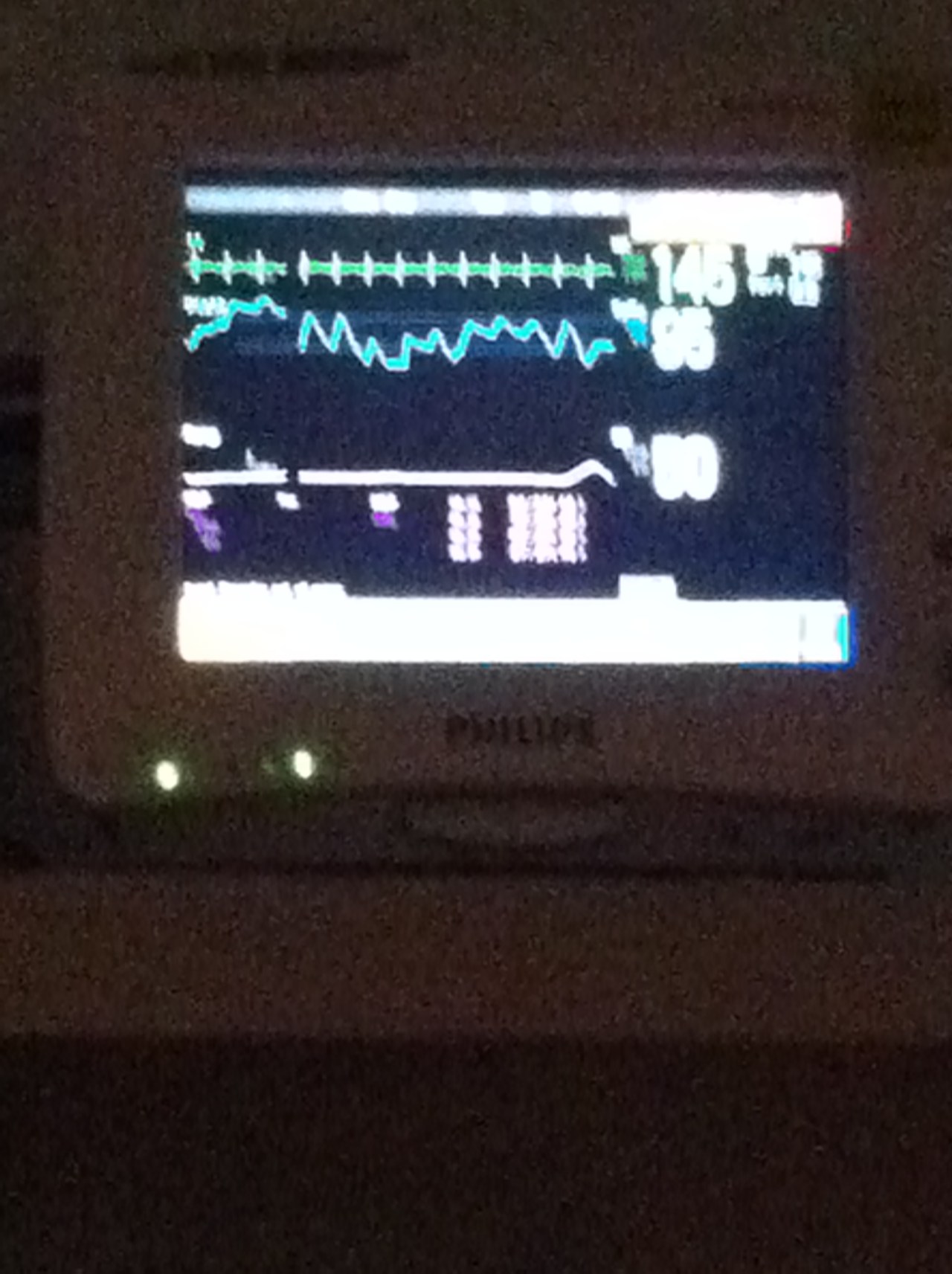
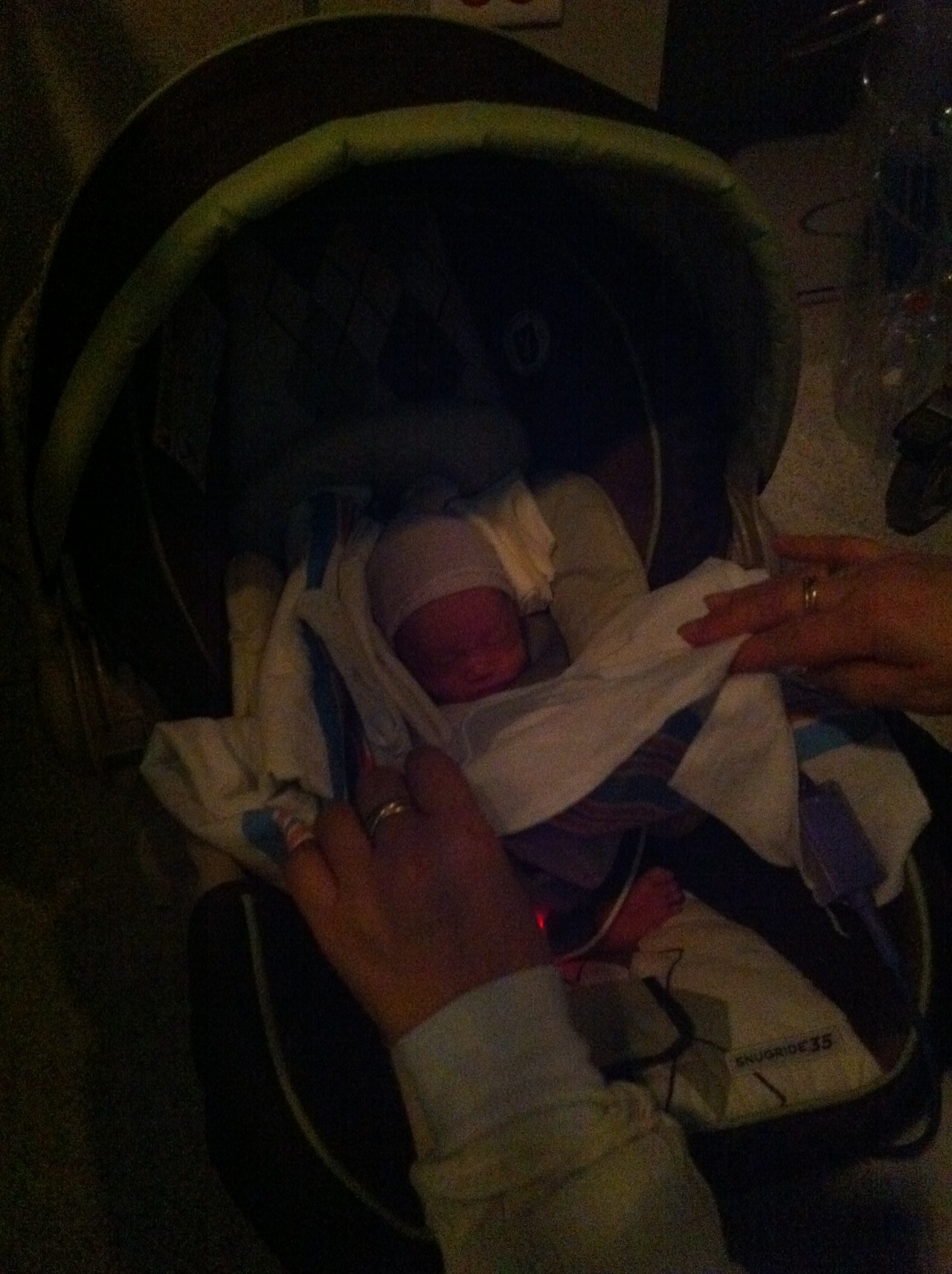
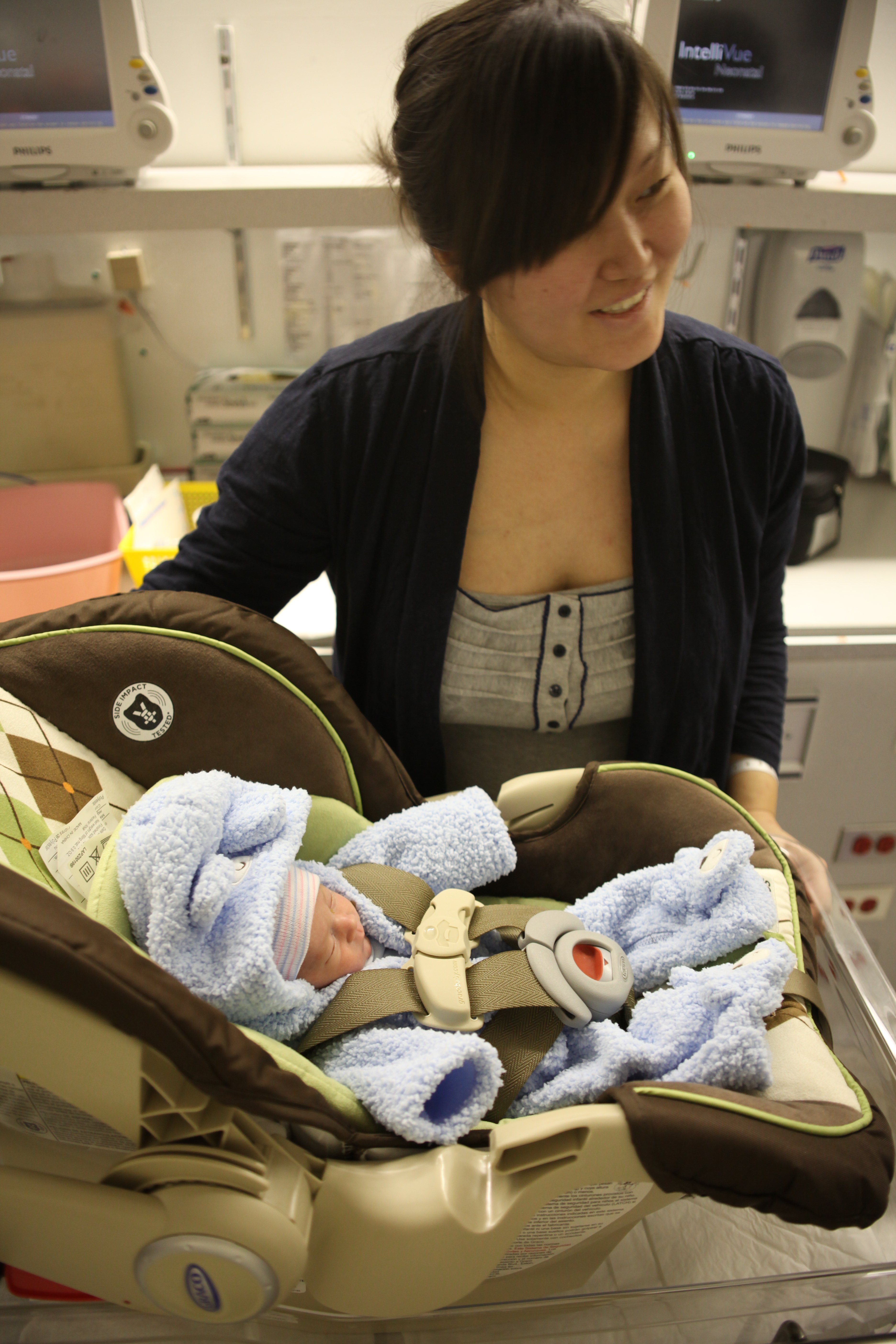
The last was the car seat test.  They wanted to see (other than if we, as new parents, could even work the carseat) if Harry is able to maintain his temperature and heartbeat in the car seat.  We tested him throughout the day, that night and the next morning before we were discharged.  I was so happy that we will never have to look at the numbers on that screen again.

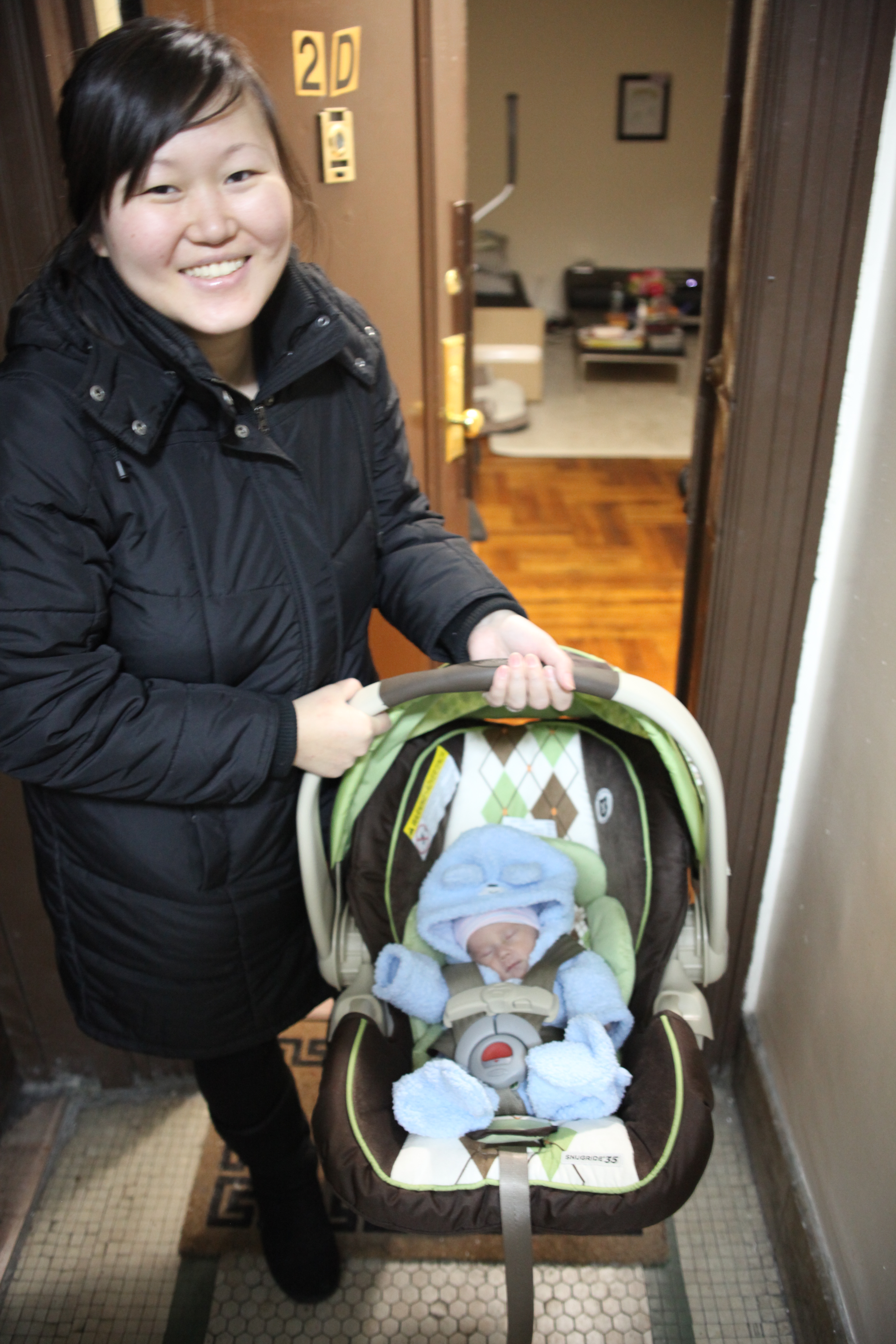
And after all the pomp and circumstances, the fuss, the paperwork and after 2 1/2 weeks in the NICU, our baby came home.  He was a little shy of 36 weeks old.  He was so very tiny.

And parenthood continued, rather . . . really started for us.

Back Camera

Monitoring his temperature and heartbeat so we can bring him home from the NICU

Bringing Harry Home

Monitor

Back Camera

One more test before bedtime

Bringing Harry Home

Prepping for our last NICU visit

Baby Harry through 2-21-11 133

Harry, we are taking you home

Baby Harry through 2-21-11 141

Let’s get you dressed

Baby Harry through 2-21-11 158

We’re all set!

Baby Harry through 2-21-11 161

Are we really allowed to leave the hospital with our own baby?

Baby Harry through 2-21-11 167

Family photo on our last day at the hospital!

Brining Harry Home

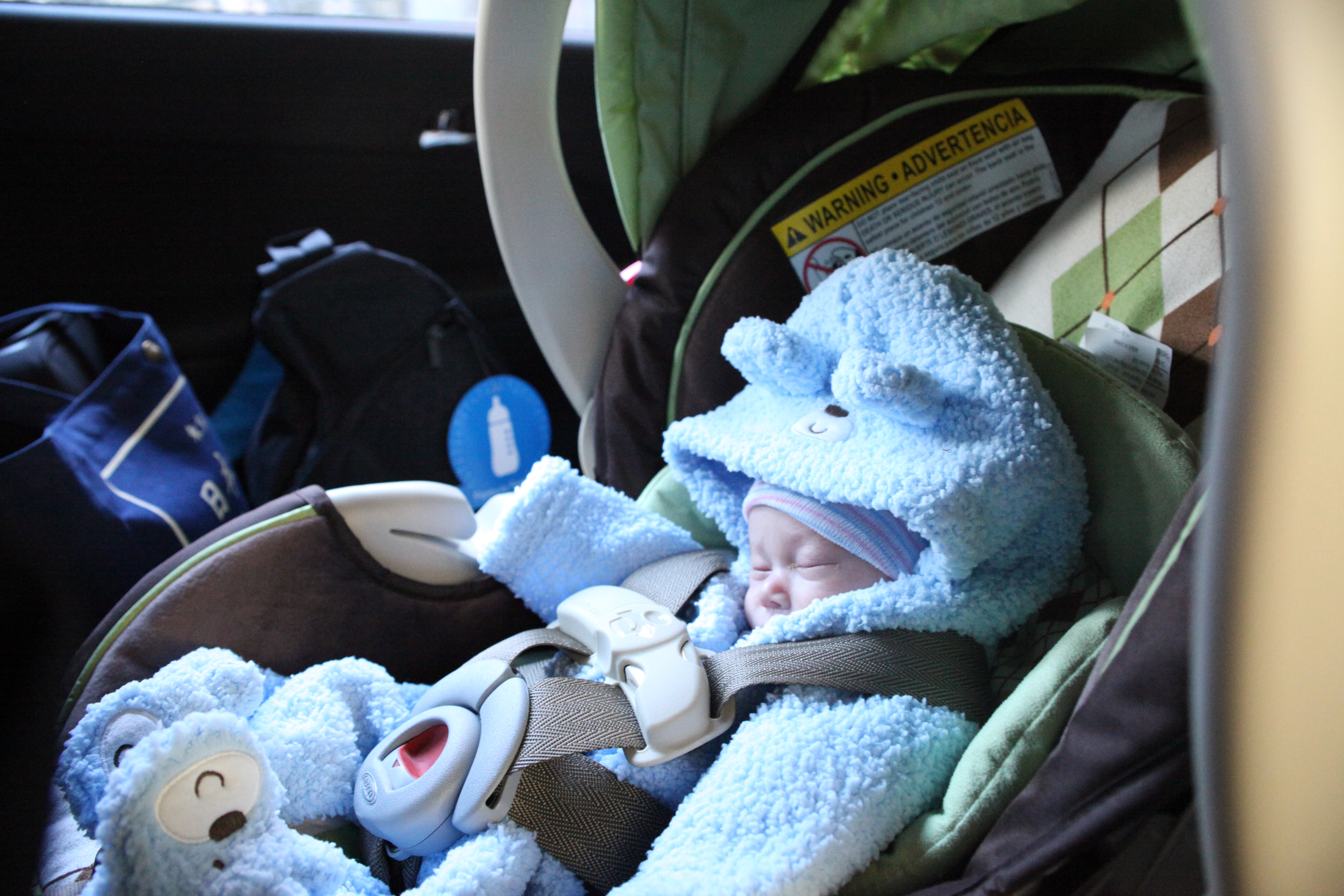
First car ride!

Bringing Harry Home

Welcome home Harry!!!!

Because of my overlapping lupus, fibromyalgia and neuropathy, I suffer from intense, widespread muscle pain . . . all the time.

In my best of moments, I experience muscle pain that seem familiar to my pre-lupus self. The foot and leg pain from walking all day in high heels. The knots on my shoulder from working long hours. The back pain from working out the wrong way. The arm aching from moving boxes all day. Pins and needles from the blood circulation being cut off in some parts of the body. The jaw pain from chewing on something hard. The butt hurting from sitting all day. My hands hurting from typing all day. I feel all these muscle pains, all at once, all the time – and these are just the milder manifestation of the pain.

Most of the time, the pain is a lot more excruciating.  It burns.  Not the way fever burns but the way you would burn if your body was a tire and it was skidding on pavement.  It burns like a roller flattening out asphalt to make pavement.  It burns the way salt scrub might feel on a burned skin.  Then there is the sensation of being punched.  It really feels like a bunch of people are actively kicking and punching me.  My body then feels bruised.  Sometimes these muscle pains feel “loud” and while invisible under my skin, the pain seems to bouncing off the muscle walls.  There simply is no good way to explain how bad all this feels.  And it is so pervasive, in its reach and duration.

So how do we cope?  Everyone has a different way to ease them of muscle pain.  This is how I try to deal with it:

  1. Hot Water Immersion:  Hot showers, baths, hot tubs, sauna, floatation, whatever it is, i gravitate towards it like a bug to a light.  I cannot really function without first relieving my stiff and painful muscles aches in the morning with a nice hot shower.  I keep a shower bench in the bath as showers are usually very exhausting.
  2. Heat: The other way to relieve the muscle pain is heat.  Moist heat works best but any heat with do.  The larger the heating pad, the better.  Sometime I need a heating blanket.
  3. Stretching: I do light stretches through restorative yoga.  It’s really the stretching and light strengthening aspects of restorative yoga moves that i really benefit from.  Rigorous positions, even downward dog, is too much for my limbs.
  4. Meditation:  If you are able to do it, this is something that has helped me greatly.  You can start slow and meditate anywhere.  To start, a guided meditation might be more helpful because it helps us think about the pain.
  5. Moving: This is not the same as exercising.  I was told that exercising is good for us and muscle pain and that might be true, but my body tended to disagree. Maybe I’m just not there yet and i have too many other issues.  But I find swimming (if you have the energy) or just walking when you can, helps relieve the muscle pain.
  6. Resting: If you are able to get some sleep, that is great but I have a real difficult with sleep.  But I still rest.  I let my body dictate when and I try to rest as much as my body asks of me, without staying in bed all day. Too much rest, like too much exercise is counterproductive for us.
  7. Massages:  I am a big proponent of massages.  I try to get it as much as I can.  It helps relieve the pain, helps with circulation and allow me to rest.  Depending on your body, you should talk to your masseuse about what you need.  For example, I never get my arms massaged because it it very painful no matter what pressure they apply to it.
  8. Medication:  Lastly, if you are able to take medication that works for you, it is not a bad idea to add it to your pill box.  While I am not a fan of the pill, I have learned that pain changes you and if there is a way to relieve it without much side effects, it’s worth taking.  I started taking gabapentin and cymbalta.  I am unsure of the benefits yet but will keep trying.

I am always searching to add to my list of go-to’s for relief.  Do you have anything that works for you?

It hurst everywhere, all the time. . .

It hurst everywhere, all the time. . . !

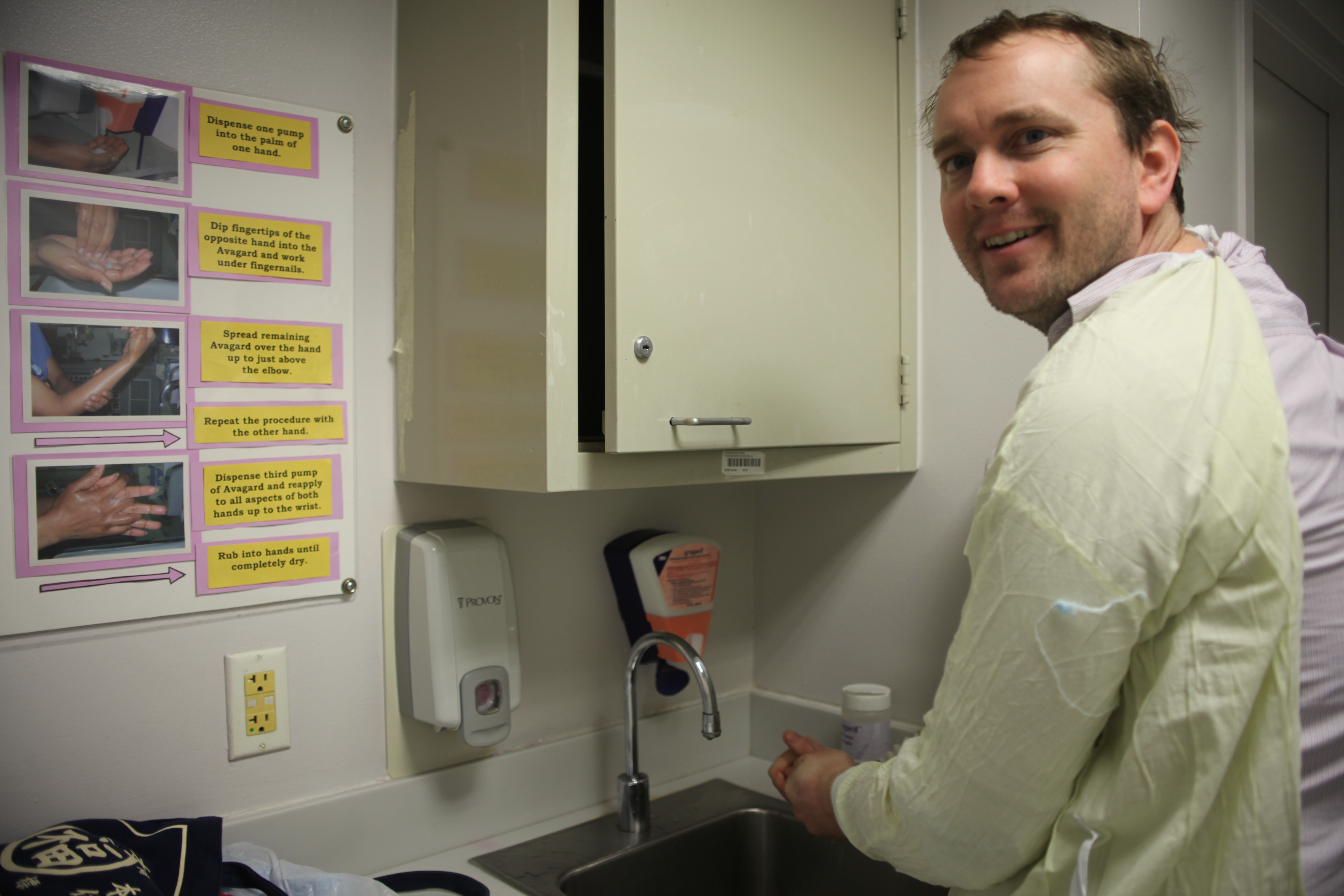
First there is the gown wearing and hand washing.

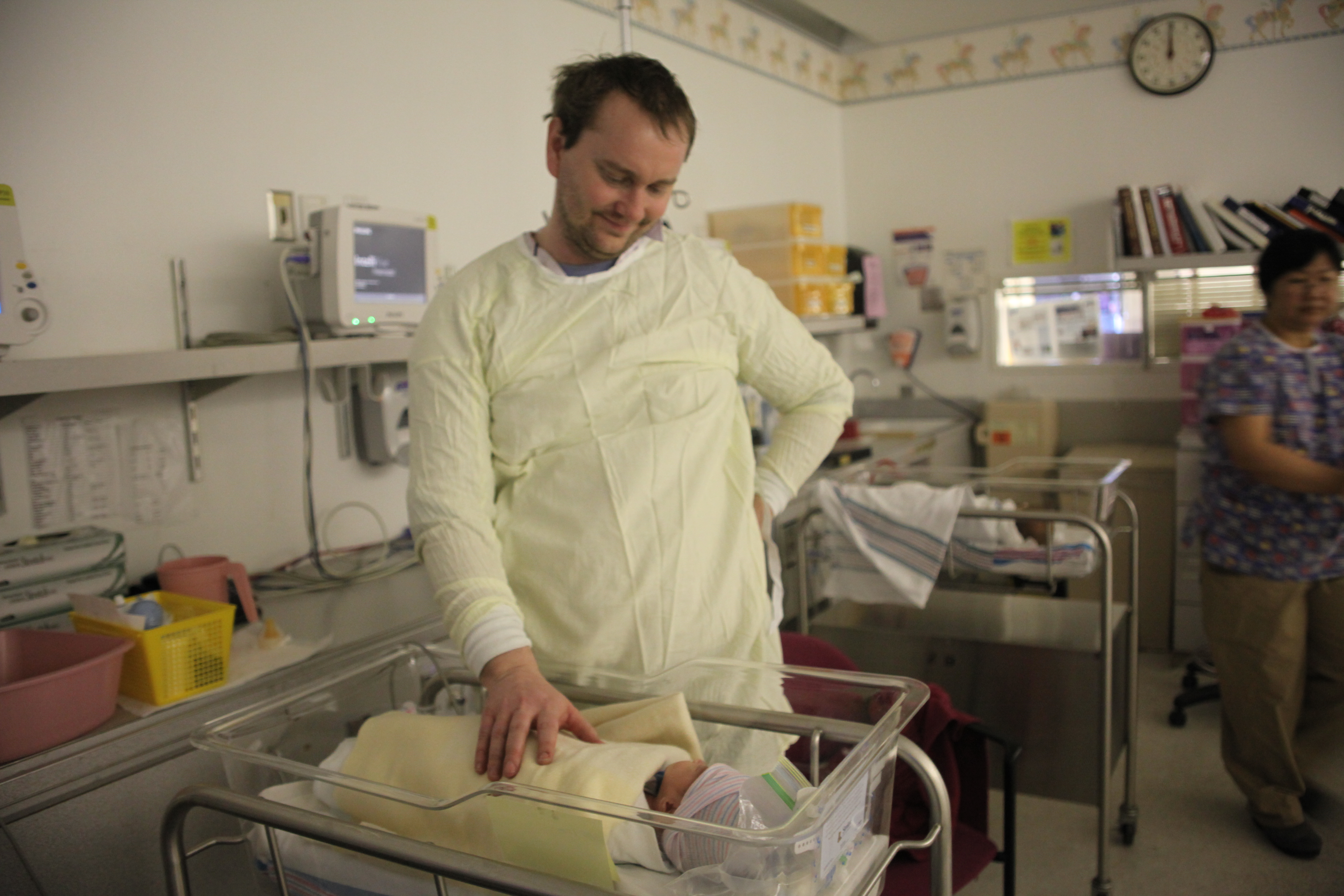
Then, when you enter the NICU, there is a thick silence punctuated by the beeping noises of the medical devices and soft cries of its resident preemies.  The room feels heavy, seemingly weighed down by the collective worries of the parents sitting next to the incubators and isolattes.

This is where my baby spent the first 17 days of his life.  This is where our newly formed family got to know each other.

I was woefully unprepared for this experience.  I did not even know that the hospital i was delivering at had a NICU.  Lucky for us, it had one of the best NICUs in the city.  Knowing that he was in good hands did not ease the anxiety that came with seeing your tiny baby in an isolette, hooked up to various monitors, eyes covered, supported by breathing and feeding tubes.

Born at 33 weeks, my baby just made the cut-off where his organs were all safely formed.  While there were still some serious concerns, our biggest issue was making sure he gained weight and maintained his health for the next few weeks.  So we got to work.  After I was discharged, we spent everyday sitting next to our newborn, holding him, changing him, feeding him and monitoring him.  We got to the hospital early and went home late.  In between, my husband was busy setting up the house with immediate needs of the nursery.  Since our baby was born so early, we did not have anything ready at home.  I was busy pumping breastmilk every 2-4 hours.  I was still suffering from my c-section surgery and most probably a lupus flare. This arduous schedule did not help me recover but fostered my symptoms.

It is hard to say if I would have done things differently.  I don’t know if I would have been able to really stay away.  Perhaps I would have rested more.  Again, maybe not have pumped so zealously.  Perhaps taken shifts.  But when you are a new mom, and a new mom with a baby in the NICU, you are full of emotions – anxiety, fear, love, shock, anger, numbness, confusion, panic, uncertainty, hope, grief, sadness, and disappointment.  Overriding all these emotions, however, was an intense need to have my baby safely home.  So there were things i felt I “needed” to do.

I felt the need to be by my baby’s side as much as I could.

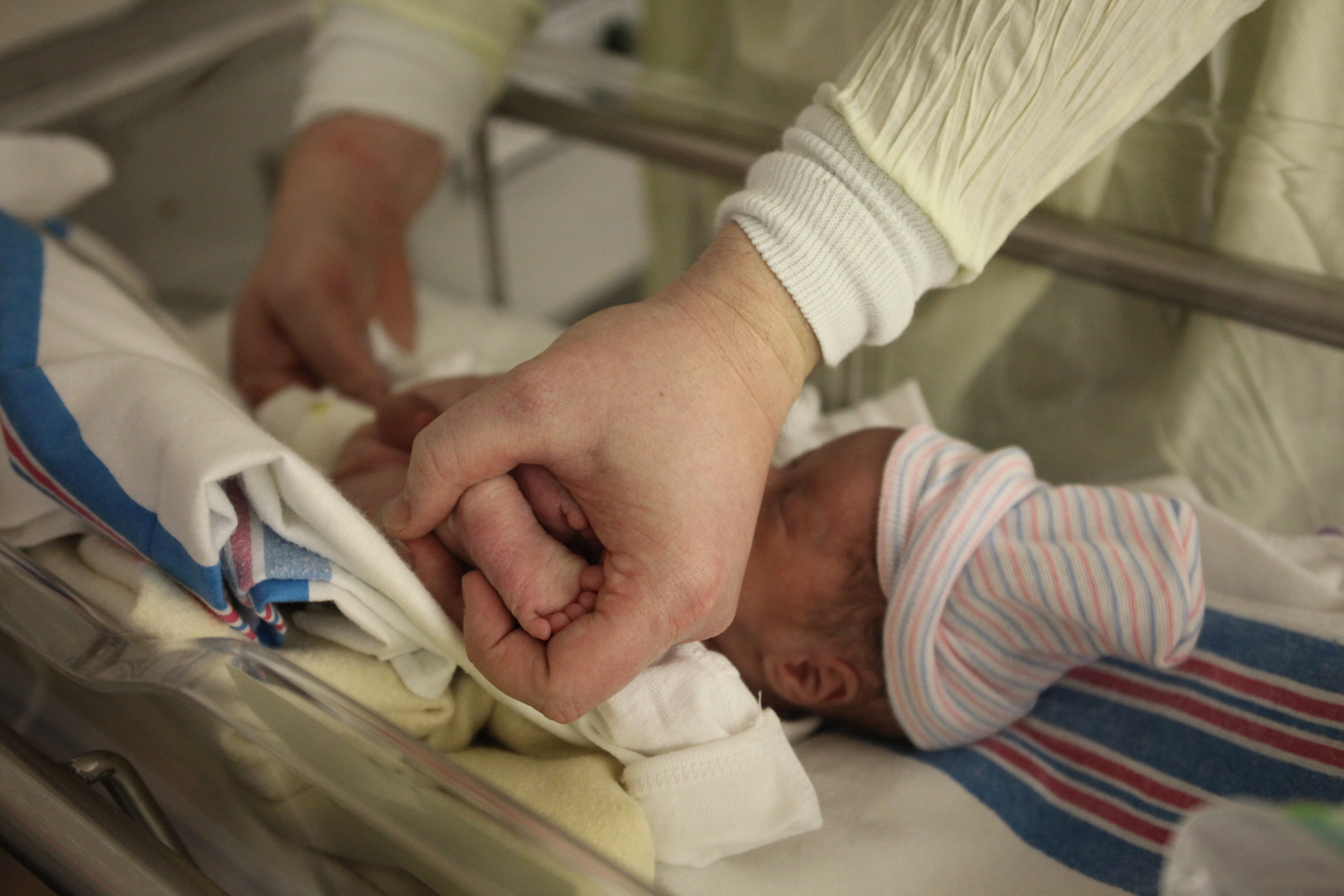
I felt the need to let him know I was there, to hold his hands, to do kangaroo care, and try breastfeeding him.

I felt the need to ensure that there was a ready supply of breastmilk for the nurses to give my baby.

I felt the need to make sure the best nurses and doctors were taking care of him.

i felt the need to make sure the nurses were giving him bottles and not just resorting to the feeding tubes.

I felt the need to provide care, participating in diaper changes, temperature and heart monitoring and bathing.

These all seem like needs that I could not ignore.  Again, I think back to that time and i knew my rigorous schedule was not good for me.  But I am not sure I would have been able to take a step back and do things differently.

My first meeting with Harry

My first meeting with Harry

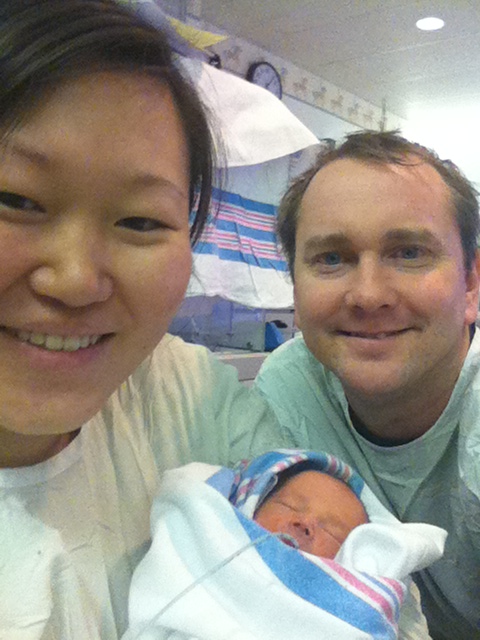
Our first family selfie in the NICU

Our first family selfie in the NICU

Proud mama

Proud mama

Trying skin to skin holding (Kangaroo) to help his heart along

Trying skin to skin holding (Kangaroo) to help his heart along

Really detested seeing my baby with a feeding tube

Really detested seeing my baby with a feeding tube

“Breastfeeding is good for the baby.”

“There is just no substite for breast milk.”

“Colostrum is liquid gold.”

And so on goes all the pros of breastfeeding, and oh the poor little baby that doesn’t get beast milk from his mom!

I took these statements to heart and was determined to breastfeed my little preemie baby.  I felt it was the least I can do for someone born too soon.

Surpassing all arguments for the pros (of breastfeeding) and cons (of formula feeding) is the golden rule that the health of the mother and baby should not be endangered in the endeavor.  If the mother is sick and needs regular medication, that mother should not breastfeed.

Why did I not think that rule applied to me?

For one thing, I did not really know that I was a sick mom that needed regular medication.  Newly diagnosed with “mild lupus” just a few months before I got pregnant, I had no idea what it meant to be sick with lupus.  I could not differentiate between post c-section pain versus lupus flare. I didn’t take the kind of lupus medications that in hindsight, I probably really needed.

Secondly, logic took a back seat when I became a mom. Despite what my body and head were telling me, I was only able to listen to my heart.  If breastmilk is good for babies, and it’s something I can provide, then I was going to do it!  It was the least I could do for my preemie baby.  So even before I was able to walk to meet my baby, I asked my husband to go buy a pump so I can provide my baby with the precious breastmilk with colostrum.  I was stubborn.  Very stubborn.

There were many hurdles.  Because my son was in the NICU, the first few weeks were spent pumping and feeding him through the tube/bottles.  When he came home, he was weak so I had to double up by breastfeeding and feeding him pumped milk.  I was exhausted.  Logic told me I should ease up, take care of my lupus and feed him formula.  But I kept up the impossible schedule for about seven months until fluid filled my heart and I was hospitalized.

I am glad I was able to breastfeed.  I will treasure those moments forever.  With that said, I would have approached it much differently if I knew what I know now.  I would have listened to my body much more.  I wouldn’t have been so zealous about exclusively providing breastmilk.  I also would not have insisted on breastfeeding for so long.  Had I been less focused on breastfeeding and more on self-care, I would not have had such a big flare and miss out on so much of my son’s first year.

IMG_1884

January 30, 2011

Motherhood started unexpectedly for me at 4:11 AM on January 30, 2011.

Unexpectedly – because Harry, my son, entered the world 7 weeks earlier than his due date. I guess it should not have been totally unexpected since 50% of lupus pregnancies end before 40 weeks. Of course, hindsight is always 20/20.

Being a first time mom, the unknown is usually filled with two things — excessive planning and unrealistic expectations. I spent so much time planning and picturing a certain kind of birth that it was difficult for me to switch gears and accept what happened.

I went to birthing classes focused on natural birth and mothering. I resolved not to resort to any drugs. I imagined a blissful labor. I dreamed of holding my son just seconds after birth. I planned to breastfeed right away. I pictured having him fall asleep on me. None of this happened. None. With many new moms, the birth rarely goes as planned but mine was just so far from what I had expected.

It was a quiet Saturday afternoon. My husband went into work and I was starting to unpack some of my purchases for the nursery when the pain started. Not that I would ever know what labor pains are like but from what I have read, this was nothing like it. The pain was not in my abdomen but in my upper chest/back. I felt light headed, dizzy and had extreme difficulty breathing. Nothing seemed to help. My husband came home around 7pm when I finally told him about my symptoms. He called the doctor’s office who informed him that maybe I was suffering from gas. He ran out and got some Gas-X. I took some and passed out for a few hours. I remember waking up and asking my husband to make me some food in hopes that it would allay the symptoms. Things started to get a little blurry from here as my symptoms worsened. I remember eating pasta and watching some SNL before we decided to check into the emergency room. At this point, I had no idea what was wrong with me, only that the chest pain felt very much like the time I was hospitalized for pneumonia.

It didn’t take long after they took my blood pressure to decide that I was suffering from preeclampsia. I was told that I needed to deliver the baby right away.

What? But I’m only 33 weeks pregnant? I’m not ready. What is preeclampsia? What’s going to happen? Is my baby going to be ok? Am I going to be ok? Am I really having this baby now? What?

While I had so many questions, there was no time for debate and after a weak (and misguided) attempt at natural birth, I was quickly prepped for a c-section. I never even read up on what a c-section was.

During the c-section, I did not feel any pain, only pulling and tugging. I was fully conscience and I had my husband talk to me during the procedure so I will not have to follow the doctor’s play by play. For example, I did not want to hear the resident being scolded for dropping a tool in my open stomach.

This really was not how I pictured the birthing process.

When my son was born, I heard a cry and I was told he was healthy. My husband snapped a quick picture but before I got to see him, he was taken to the NICU. I was wheeled into a recovery room and was not allowed to see him. I had to stay in the recovery room, where I was only allowed ice-chips and videos of my newborn from my husband’s iPhone.

Later that morning, I still have not seen my son but I was moved to a hospital room. I had requested a private room but while we were waiting, they put me in a room with another new mom. She was full of energy, had a natural birth (and a easy one from what I overheard) and was on the phone non-stop telling everyone about her birth experience. As I laid there, I started to really break down. The anesthesia from the c-section was wearing off and as the physical pain set in, so did the reality of what happened. I just gave birth, via c-section and I still have not held my son. When they brought in my roommate’s baby to breastfeed, I just snapped. I was quickly changed into an empty room. Apparently, the nurse overlooked a hospital policy against booking natural birth moms with c-section moms in the same room.

Later that day, I was asked if I felt well enough to go visit the NICU. I was feeling awful and walking was extremely hard but since my baby could not be brought to me, I had to go see him. The walk to the NICU was the hardest I ever made. My heart broke when I saw my little boy for the first time. When I got there, Harry was inside an incubator with heart and pulse monitors hooked onto his little body. He was wrapped up in his baby blanket and hat. He had an eye mask and was hooked to an oxygen tube. I could barely see him. He was so tiny, weighing in at less than 5 lbs. I didn’t know what to do. The nurse thankfully came over and unhooked him so I can hold him for the first time. When I did, words could not describe the dreamlike euphoria I felt. Even though the birth experience was not what I had planned, holding this new life in my arms felt nothing short of a miracle. At that moment, it was just me and little Harry. Nothing mattered but that he existed. For the first time since I entered the hospital, tears of joy, not of pain, wet my cheeks.

Whatever the beginning, he was here, in my arms. And all I managed to say was “hello my baby, thank you and I love you.”

January 30, 2011

When I went on early maternity leave four years ago, I did not know that I would not be returning to my office.  When I left in January of 2011, I left with my laptop and my blackberry, as I did every night for the past four years on the job.  My baby was due in March but because of my health, it was advised that an early maternity leave would be wise.  I was a litigation attorney and at the time, I was involved in an intense bankruptcy case that was requiring me to put in long hours.  Seven months pregnant and harboring lupus, I thought it best to take it easy.

If someone had walked into my office the next day, it would have looked like I was coming back any moment.  My computer screen blinking, active case files on my desk, my sweater hanging behind the door, framed personal pictures on the shelves and coffee mugs on the ledge.  This was because I had fully intended to return after the birth of my baby.  I was a sixth year litigation associate honing my craft, and I had an offer to teach at Columbia law school when I returned.   It was not a matter of “if” but more of a question of “when” — was I going to return to work after the 4 month maternity leave or was I going to take an additional 2 months and return in the fall?  I also expecting to be answering e-mails and doing some work during my leave.

It took me a long time to accept that my health would not allow me to return to work.  First I thought, ok, I’ll take a few more months off but I’m returning in September.  Then as I became hospitalized and unable to walk, I thought, ok, I’ll give it a year to recover.  But as my inflammations continued, I realized that going back to work will have to be tabled indefinitely.  My early maternity leave became a leave of absence, and my temporary disability became permanent.

It is true that many women never return to work after the birth of their child, opting to become a stay at home mom.  I don’t think there is anything wrong with that. That, however, was never my intention.  When I went on leave, I fully intended to return and that option was taken away from me.  I grievously mourn the loss of my ability to work.

IMG_3310

When I was first diagnosed with lupus, I did not really read many books on it.  When I got really sick, however, I wanted to learn all about it.  I wanted to learn why I was told “despite lupus, you can still live your life” — when I was bedridden, unable to walk or care for myself, for nearly over a year.  What the hell happened?

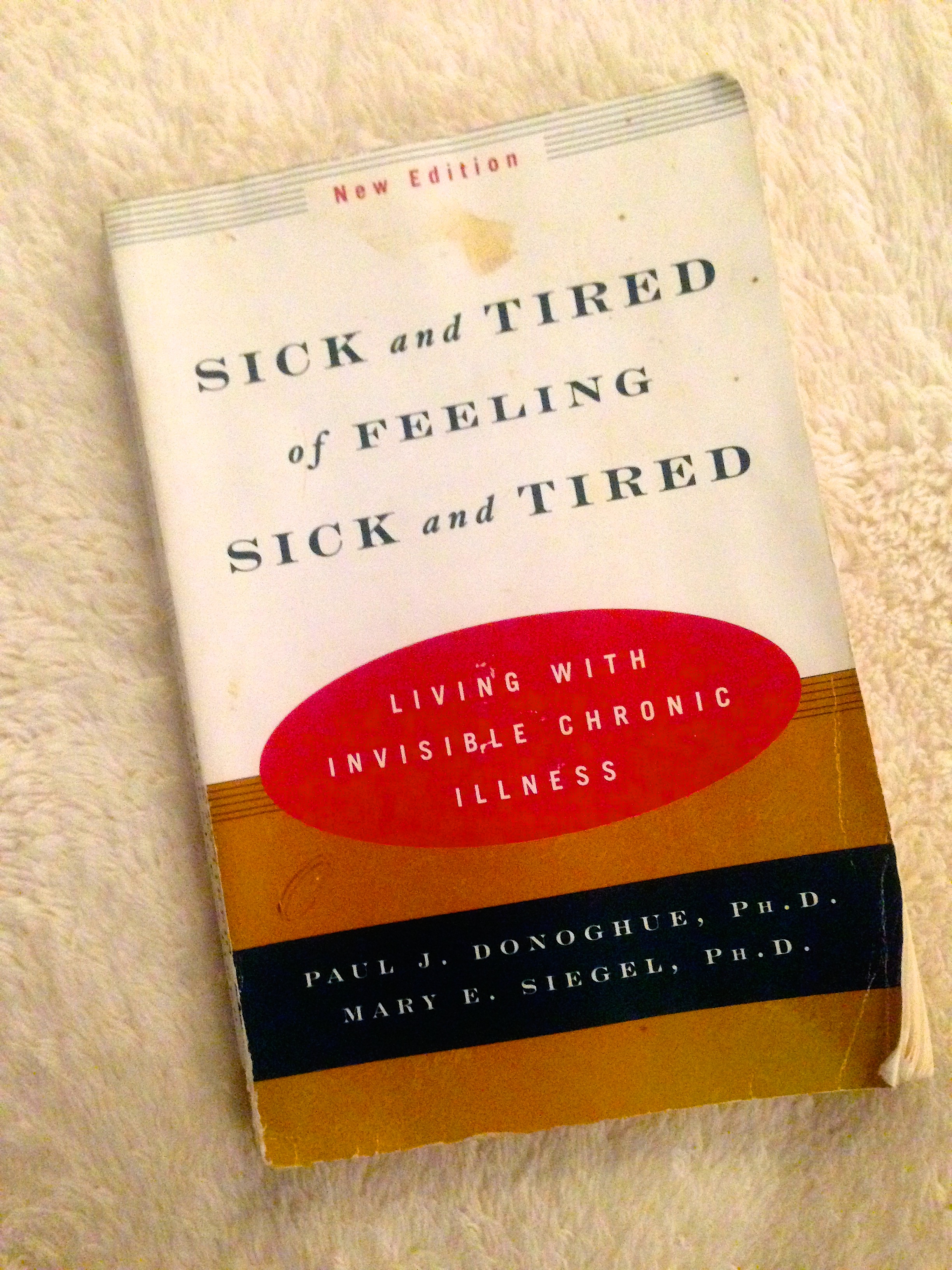
There were many books but not many answers.  Some books were too superficial, while some books were too technical.  Many spoke in percentages which did not really resonate with me (i.e., X percent have organ involvement).  The one book that I really enjoyed reading was “Sick and Tired of Feeling Sick and Tired” by Paul Donohue and Mary Siegel (W.W. Norton, 2000).  Over time, I keep coming back to it again and again.  It is mostly anecdotal, but all the stories have been well distilled into relatable subjects.  The title really says it all.  I DO feel so sick and tired of feeling sick and tired . . .  all the time.

Here are some passages that helped me understand what I was going through:

  • “This fatigue is relentless.  Overexercise or overwork does not cause it and bed rest frequently fails to relive it.  It appears regardless of activity or inactivity, happiness or sadness.  It simply exists in and of itself, and no medication, probative thought, or rest can relieve it.” (p.7)
  • “There are no social rituals surrounding ICI [invisible chronic illness]: no hospital visits with flowers and sympathy to bestow some degree of validity and importance on the illness and its victim.  The individual is on her own to cope with an unending set of painful, bewildering symptoms and the often hurtful reactions of others.  The combination of pain and lack of adequate comfort frequently results in depression.  The the depression is blamed for the illness.” (p.53)
  • “Chronic invisible illnesses are different.  tHey do not follow the predictable path from warning sign to recovery.  Rather, the sufferer lives with baseline of unwellness that is interrupted by periods of exacerbation and remission, relapse and remission.” (p.56)
  • “As disappointing as it is to accept the limitations imposed by illness, arose still are the severe shame and embarrassment, as well as tension, that come in trying to communicate these limits to others.” (p. 61)
  • “The patient lives in fear that the disease may seriously worsen, threatening not only his quality of life but even life itself. . . . Clients tell us that at times like this that they often wish to die.  Living with pain or debilitating fatigue and the fear makes a final ‘simple’ answer of death seem appealing.” (p.63)
  • ” . . . being depending is a humiliating experience to which adjustment is not at all easy. Having to be helped to the toilet, steadied as we walk, or spoon-fed can erase any sense of dignity.” (p.67)
  • “First [the patient] is the victim of materialists who doubt the illness because it cannot be measured, and then he is subjected to the demands of spiritualists who claim that he is responsible for the illness and its cure by his attitude and spiritual courage.” (p. 76)
  • “A friend’s simple question, ‘How are you?’ is not simple for the sufferer of invisible chronic illness, who may be preoccupied with her body and with pain.  To respond ‘fine’ sets off feelings of resentment and loneliness; yet to talk again of pain or fatigue triggers fear of the other’s impatience or rejection.” (p. 94)

And so forth. . . . The book is about the experience of an invisible chronic illness as well as advice on how to cope with living with it.  Whether you are patient, a caregiver or just a loved one wanting to understand, I highly recommend adding this book to your library.

IMG_1421

“It changes you.”

Oddly enough, the two people who are most involved in my progress are none other than my rheumatologist and my disability case worker.  Who knew that in my mid-thirties, my closest relationships would be with these two people.

How did this come about?  Well, my immediate family, since they live it with me, no longer asks about my condition.  Outside of that, I have lost touch with most people I knew before the disease activity plucked me out of society and plunged me into my new (solitary) lupus life.  Others, I have very limited social interactions with and they have no idea what my life is like.

So it’s funny that my confidants have become these two unlikely professionals.  I am hoping to add a third person, a much needed therapist to the list, but until then, these two people have been my therapists.  They have been there from the start of my disease activity, through the worst times and its ups and downs during my “recovery.”  As a primary doctor and as a case worker, they have checked in regularly to see the progress of my disease.

The other day, I was talking to my case worker and a question came up on whether I have been able to get out and socializes. Whether I have been able to have visitors to break away from the solitude, and whether it might not be a good idea to do so as the winter months were approaching us.

I imagine she wast just being polite but I took the bait and poured my heart out.  I guess I sort of needed to verbalize what has been inside of me for a long time.

All of my relationships have changed, most not for good, including my relationship with my immediate family, my extended family, my best friends, my friends, my acquaintances, my co-workers, and frankly, even my dog.  Lupus has touched all.

To sort out what happened to each of my relationships will probably require individualized assessment.  While lupus was a dominating force in the change, the change did not happen in a vacuum but in the context of pre-existing relationship.  How to go about bridging the gap in these relationships pre -and post- lupus will take time.  Lots of time.

I feel like I have been burned, left behind, uncared for, misunderstood, and/or forgotten.

But most importantly, I feel like I no longer care.  I can no longer relate to most people and therefore, no longer care for their company.  After all, how can I talk about shoes with a girlfriend when I cannot wear heels because of my nerve damage and it is difficult enough to walk in comfy flats.  How can I relate to someone with career problems when I have not been able to work for over three years.  How can I enjoy a night out when I can barely make it through a meal. The list goes on. . . .

When I explained this to my case worker, I realized that not only have I taken up her time, but I must have sounded weird. Her response, however, surprised me.  She explained to me that what I have gone through, well, these experiences, it changes you.

She shared with me her personal traumas and how it changed her.

I always believed that people didn’t really change.  Through time, we got better or worse, but our core remained the same.  But I do believe that I have changed.

My entire life, I long craved company.  It always seemed like anything worth doing was made more enjoyable by sharing the experience.  This is what fundamentally changed within me.  I no longer need or want company.  I truly enjoy solitude and every relationship seems like a burden.  This is mostly due to two things; it is physically difficult to engage in social interactions and it is nearly impossible for me to relate to most people.

I know it’s not healthy. But I am not healthy.

I have a small nugget of relationships that I have preserved, cultivated or resuscitated. As I nurture these relationships, I do hope that I will be able to add more.  Almost as important as repairing old relationships is how to forge new ones.  As the relationships will be different, it will be interesting to see how things develop in the future.  I am, however, in no rush.
It Changes You . . . !

                                                                  It Changes You . . . !
It’s Christmas eve, eve . . .  and the pressure is mounting.  So much to do! . . .  and yet, so little energy.  Holidays are really tough on us lupies.  Christmas used to be my favorite time of the year, but after I became sick, it became really hard to enjoy the holidays.  I am just too sick and tired to do the things I used to enjoy.  It was just impossible to do everything that I thought I needed to do.  AND that was just it.  I had to come to terms with the fact that I can no longer do everything.  This is my fourth Christmas since being diagnosed with lupus.  Each year has been different, and while I am still getting used to things, I have learned along the way to make the holidays a little more bearable, and therefore, much more enjoyable.  In learning how to acclimate to the new normal, here are a few things that I do to make the holidays more jolly:

  • Pace Yourself:  This it the number one golden rule.  While everyone is used to running themselves a little hard during the holidays, for us lupies, the consequences can be severe.  We will inevitably suffer a flare and will be too sick to enjoy any of the festivities.  Cut down on the tasks, the number of events and minimize your obligations.  Then, give yourself more than enough time to accomplish and engage in all the things you allow yourself to do this holiday.
  • Set Your Own Holiday Fun:  Our disease affects us all differently and even within ourselves, the disease acitvity can take many different paths.  For some of us, that means we can entertain guests.  For others, that means being able to travel to a friend or relative’s house.  Sometimes, that might just mean a quiet holiday at home or a quiet dinner at a restaurant.  While last year I traveled, this year, I decided to give myself a break and enjoy a quiet holiday at home. Every year is different!
  • Be Flexible:  I am a planner.  It gives me comfort to know that I have a set itinerary.  This goes directly against the unpredictability of lupus.  So, I plan loosely, giving myself enough time, and with some flexibility in case I have to change or cancel my plans.  My flares creep up on me unexpectedly, so I have learned not to get frustrated (or at least I try!) when plans inevitably have to change.
  • Just Say No:  During the holidays, there are a lot of engagements.  Company parties, family parties, school parties, and friend get togethers.  There is just no way you can do it all, even if you want to!  So you have to decline certain invitations. Perhaps you can decline some this year and take turns by accepting them next year.  It might be hard to pick and choose but your body will thank you.
  • Ask for Help:  It is hard to ask for help.  Even after five years of living with lupus, I still find it really hard to do this.  Still, it is essential that we ask for help and not try to do everything ourselves.  Usually your family and friends are happy to help out, and are relieved to know exactly how to do so.
  • Take Shortcuts: Amazon.com has become my best friend.  Whatever your online shopping favorites are, utilize them for your holiday shopping.  There is no way I could have gotten my holiday shopping done if I had to go shopping to stores.  You can also mail the gifts directly, which saves you a trip to the post office.  Also, if you have any local grocers/caterers that deliver, you should not be shy to use them for your holiday meals.  Whether you are entertaining or bringing something for potluck dinner, you should save the energy from not cooking and use it to engage with friends and family.  I tend to like cooking myself, but I take shortcuts when I can.  For example, I like to make holiday ham but this year, letting myself off the hook and buying biscuits/bread.
  • Take Time For Yourself: It is easy to spend the holidays running around, shopping and getting everything in order.  While enjoyable, it can very easily get exhausting.  It is important to take some time for yourself and not to forget about your needs.  Whether that is taking some time to rest or nap, to enjoy a quiet meal, to do some stretching . . . you have to put yourself first.
  • ENJOY:  Most of all, enjoy! This year, you might be feeling well or you might be bedridden.  With the unpredictability of our illness, it’s hard to know.  But, whether you are able to fully engage in the holidays or not, try to find something to enjoy.  My second Christmas after being diagnosed, I wa sick in bed and was unable to walk.  I was so sad and frustrated that I could not decorate the tree, buy presents or make Christmas breakfast.  Even so, I took pleasure in being with my family and watching some of my favorite Christmas movies.  It was a different holiday but memorable nontheless.

Happy Holidays!

IMG_1307